Digital waste tracking for clinical waste transfer stations
Permitted clinical and healthcare waste transfer stations in England and Wales must report every load they receive to DEFRA from 1 October 2026. Scotland and Northern Ireland follow in January 2027. The duty applies to every site that is licensed or permitted to receive controlled waste, and that includes sites operating under the standard rules for the transfer of healthcare waste.
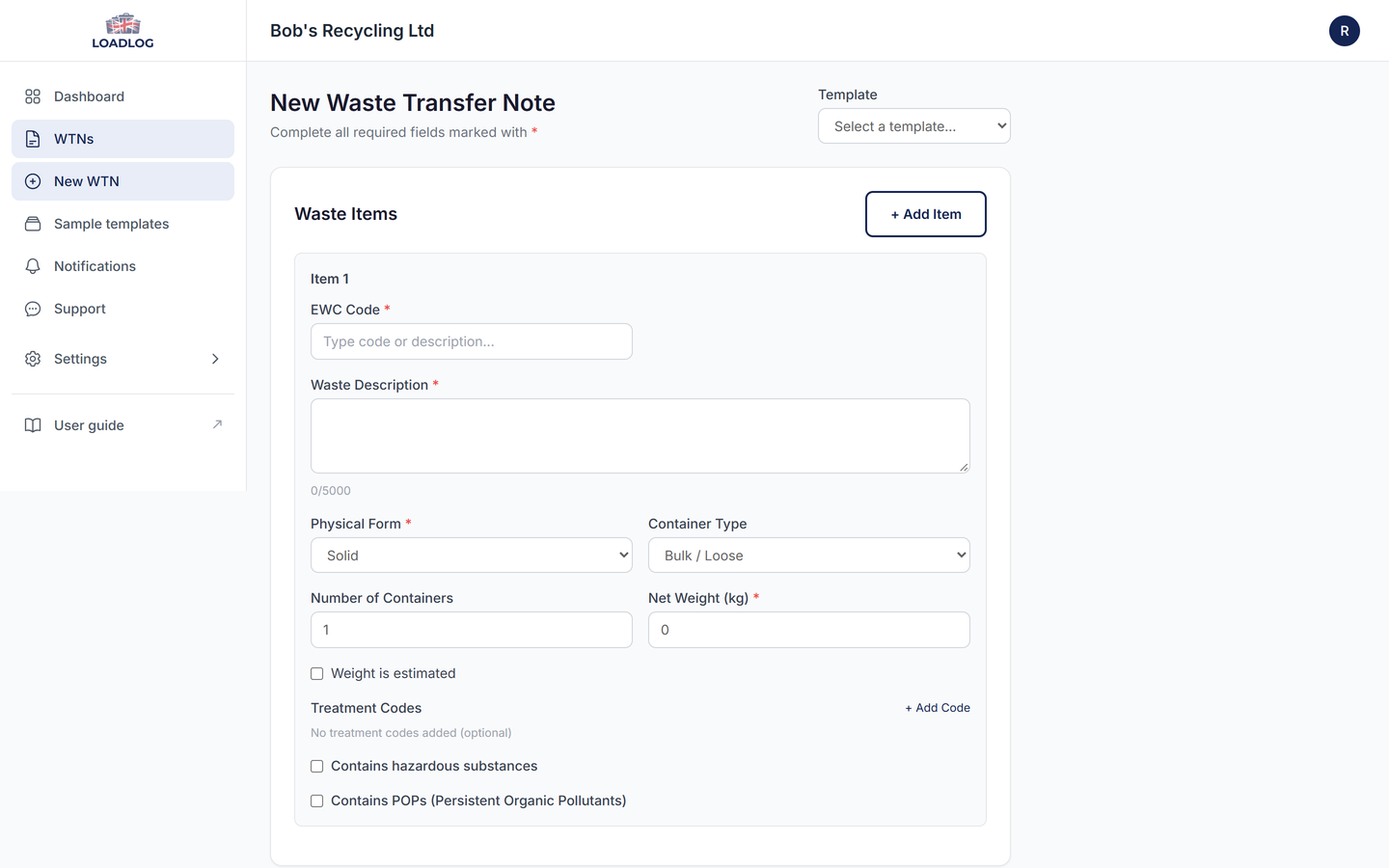
LoadLog records each incoming load at the gate: the description, the EWC code, the quantity and the carrier details. It submits the record to the digital waste tracking service and keeps a PDF for your compliance file.
Digital reporting does not replace hazardous waste consignment notes. They continue alongside the service, and each consignment note on a load becomes its own record. LoadLog handles the digital half, so inspections find everything in one place.
Two records for every healthcare load
Infectious healthcare waste is hazardous waste, and it moves on consignment notes. Offensive waste is non-hazardous. From October 2026 a digital receipt goes to DEFRA as well, within two working days of the load arriving. At a transfer station taking deliveries from clinics, care homes and dental practices, that is a lot of small, similar records.
LoadLog captures the details once at intake and turns them into the digital record. The hazardous property codes and, where they apply, the POPs details the service asks for sit on the same screen as the description and the weight.
Built for infectious and non-infectious streams
Clinical waste splits into streams that behave differently under the rules. Infectious waste is hazardous waste. Offensive waste is not hazardous. Cytotoxic medicines and dental amalgam are hazardous again. Getting the classification right at the gate is what makes the record right.
The sample library ships with ready-made templates for the main healthcare streams: infectious clinical waste, offensive waste, cytotoxic medicines and discarded medicines. Copy one into your organisation and the codes and descriptions are pre-filled, so the person at the gate picks a stream instead of hunting through the full catalogue.
Saved templates work the same way for your regular customers, so a weekly collection from the same clinic takes seconds to record.
The gate routine
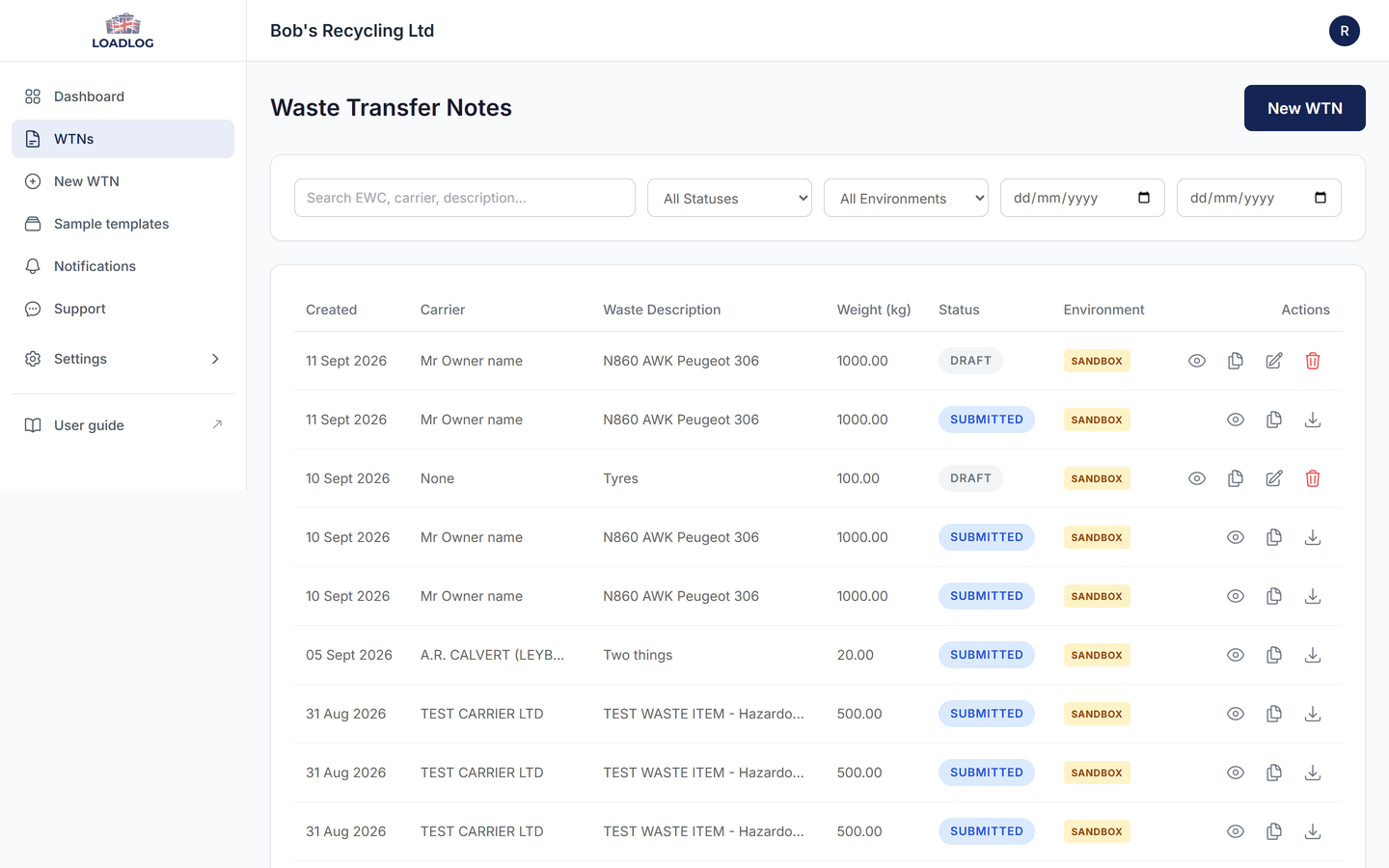
The carrier is checked against the Environment Agency's public register as the record is created, so an unregistered carrier is caught before the load goes into your system. Signatures are captured on screen, on whatever device is to hand, and every submitted record keeps a PDF ready for an inspection or an audit trail.
If your other software already holds the day's deliveries, bring them in. A CSV from a route or client system becomes a set of draft records with the checks applied, and you review everything before it reaches DEFRA.
The deadline
Report digitally from 1 October 2026 in England and Wales. A fixed penalty of £1,000 applies per breach, and variable penalties with no upper limit are also available. Hazardous waste consignee returns continue as normal alongside the service.
One more thing worth knowing: the Environment Agency revised the standard rules for healthcare waste transfer stations in November 2021, cutting the annual throughput limit from 75,000 tonnes to 5,000 tonnes and setting storage time limits for different waste types. The sector is used to the rules moving. This October it is the reporting that changes.
Frequently asked questions
Are clinical waste transfer stations in scope?
Yes. If your site is licensed or permitted to receive controlled waste, you are in scope, including sites operating under the standard rules for the transfer of healthcare waste. Report from 1 October 2026 in England and Wales, and January 2027 in Scotland and Northern Ireland.
Does digital reporting replace hazardous waste consignment notes?
Not yet. Consignment notes and paper records continue alongside the service. Where a vehicle carries several consignment notes, each note is entered as a separate record, and consignee returns continue as normal.
Which EWC codes do healthcare waste loads use?
The common ones are 18 01 03* for infectious waste, 18 01 04 for offensive waste, 18 01 08* for cytotoxic and cytostatic medicines, and 18 01 09 for other medicines. Dental practices add 18 01 10* for amalgam waste. The asterisk marks hazardous waste. The sample library has ready-made templates for the main streams.
Does LoadLog capture hazardous property codes and POPs data?
Yes. Hazardous loads record their hazardous property codes, and where a load contains persistent organic pollutants, the POPs details including the concentration values the service asks for. The classification comes from your waste assessment or the consignment note.
One vehicle carries several consignment notes. How do we log that?
As separate records. The service expects an entry per consignment note. LoadLog keeps the vehicle and carrier details with each entry so the extra records take seconds to add.
What happens if we miss the reporting deadline?
Records go in within two working days, starting the day after the load arrives. Miss it and you can face a fixed penalty of £1,000 per breach, plus variable penalties with no upper limit.
Sample templates, carrier checks and PDF exports come with Compliance Lite, which is free until the end of 2026 for sites that sign up before October 2026.