Hazardous waste software that carries the extra paperwork
Hazardous waste sites bear the heaviest reporting load in the industry. A hazardous waste movement already carries hazard property codes, and the digital record adds persistent organic pollutant data and concentration values on top. From October 2026, every one of those records has to go to DEFRA's Digital Waste Tracking Service.
If you hold a permit to receive or treat hazardous waste, you are a receiving site under the DWTS. The digital record runs alongside your existing hazardous waste consignment notes, which continue for now. The two sit in parallel, not instead of each other. For what the note itself has to carry, and how long each party keeps it, see the hazardous waste guide, or the five parts of a consignment note.
Hazardous waste adds fields a standard transfer note does not carry. Hazard property codes, POPs indicators, component concentrations. LoadLog builds those fields into the record as the waste is entered, so the operator is not assembling the detail by hand from a technical guidance document.
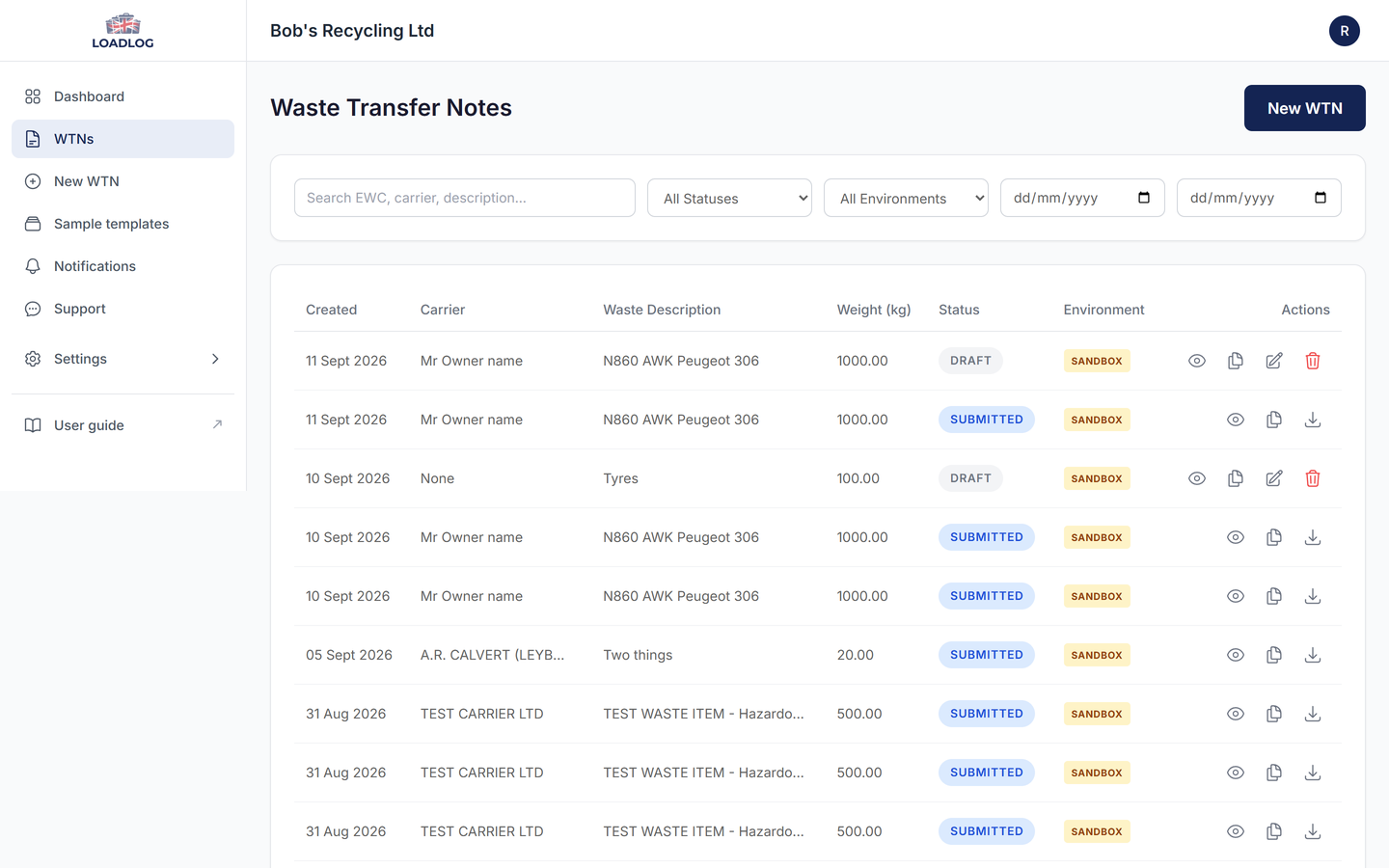
LoadLog records the load, checks the carrier registration against all four UK public registers, captures the digital signature and submits the record to DEFRA automatically. Permitted hazardous waste sites keep consignment notes for five years (a landfill keeps all records for as long as it holds its permit) and other records for the life of the permit, and LoadLog keeps them all in one place, ready to download when an inspector asks.
The sample library includes templates for common hazardous loads, including waste engine oil, lead-acid batteries and contaminated packaging.
Sites that handle a lot of small consignments do not have to type every one. Import a day's worth as a CSV, check the preview, and the consignments arrive as drafts ready to submit to DEFRA in a batch. Columns are matched automatically and remembered, so regular imports take minutes.
Start free with five notes a month, or use Compliance Lite at £12 a month for unlimited notes and bulk entry. Hazardous waste sites can get the new fields right from the first load.
Start your free account today. No credit card needed.
Frequently asked questions
Which wastes count as hazardous?
Waste is hazardous if it, or the substances it contains, is harmful to people or the environment. The examples cover most of what sites handle: asbestos, solvents, oils, batteries, pesticides, and equipment containing ozone depleting substances such as fridges. The List of Waste code and the hazard properties decide it in practice, and the hazardous waste guide walks through the classification.
Do consignment notes stop now that DWTS has started?
No. The paper-based method continues to run alongside the digital service, so hazardous loads still move on a consignment note and receiving sites report each load as a digital record as well. A load covered by more than one consignment note is entered as a separate record for each note. The DWTS guide for hazardous waste sites covers the digital side.
How long must hazardous waste records be kept?
It depends on the party. Producers and holders keep their register for three years; carriers keep records for one; dealers and brokers keep producer records for three. Permitted waste sites keep consignment notes for five years and other records for the life of the permit (landfills keep everything for as long as they hold the permit), and exempt sites keep records for three years. The guide breaks down all the retention periods.