Digital waste tracking for soil and aggregate treatment
Permitted soil treatment and aggregate recycling sites in England and Wales must report every load they receive to DEFRA from 1 October 2026, with Scotland and Northern Ireland following in January 2027. The duty covers any site licensed or permitted to receive controlled waste: soil and aggregate producers under the standard rules, contaminated soil treatment sites, and construction and demolition waste transfer stations that hold a permit.
LoadLog records each incoming tipper and grab load at the gate: the description, the EWC code, the quantity, the carrier and the vehicle. It submits the record to the digital waste tracking service within the two working day deadline and keeps a PDF for your files.
No gatehouse PC required. It runs in the browser on the phone or tablet your staff already carry.
Built for repetitive loads
Yards like these take the same handful of materials all day: concrete, bricks, mixed rubble, soils and stones. The person on the gate should not need to think in codes. The sample library includes templates for the main grades, each pre-filled with the right EWC code and official description, ready to copy and use.
Save your own templates once your regular streams are known. The gate routine becomes: pick the grade, weigh or estimate, sign on the screen, and the record is ready to submit.
From yard records to DEFRA drafts
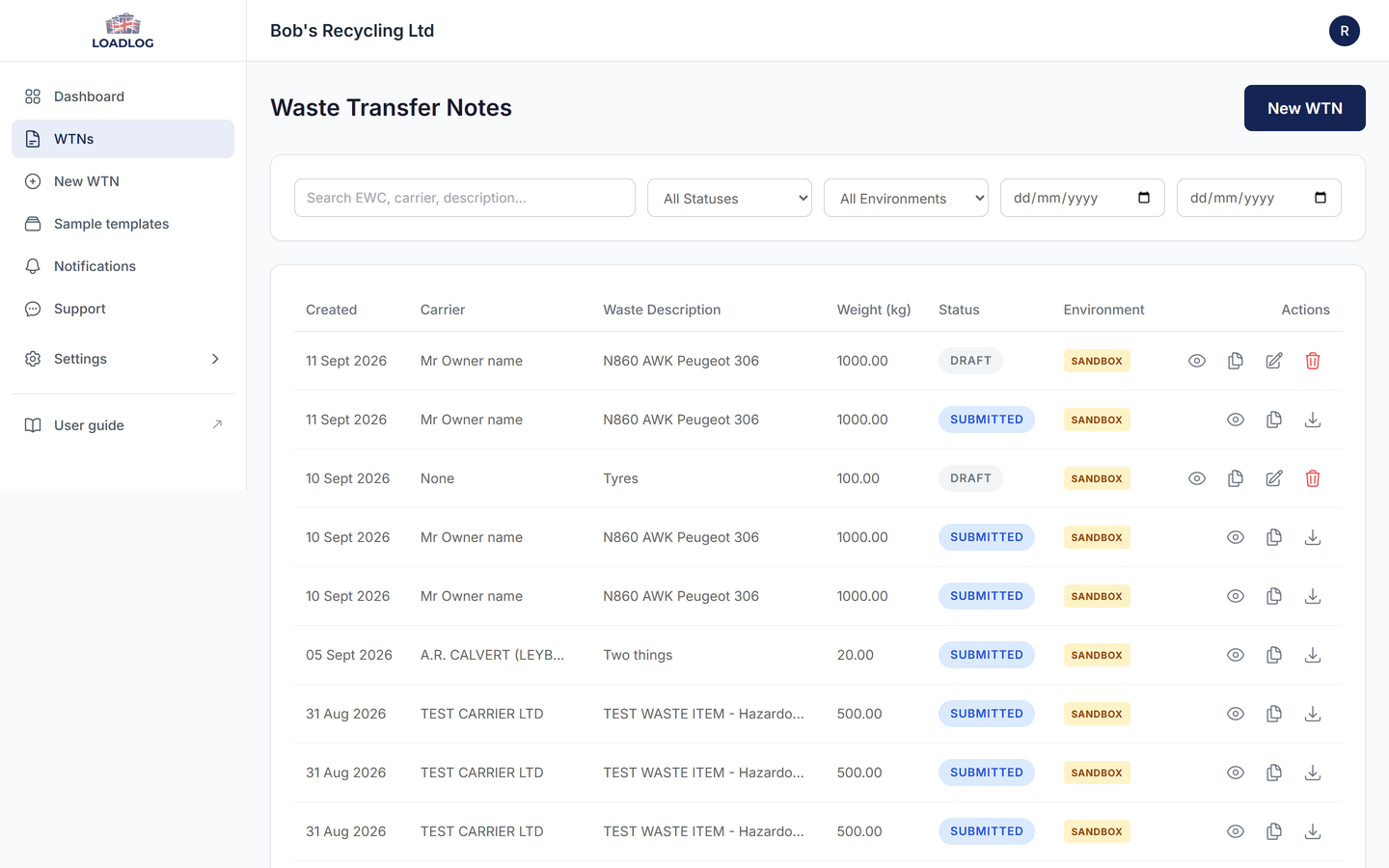
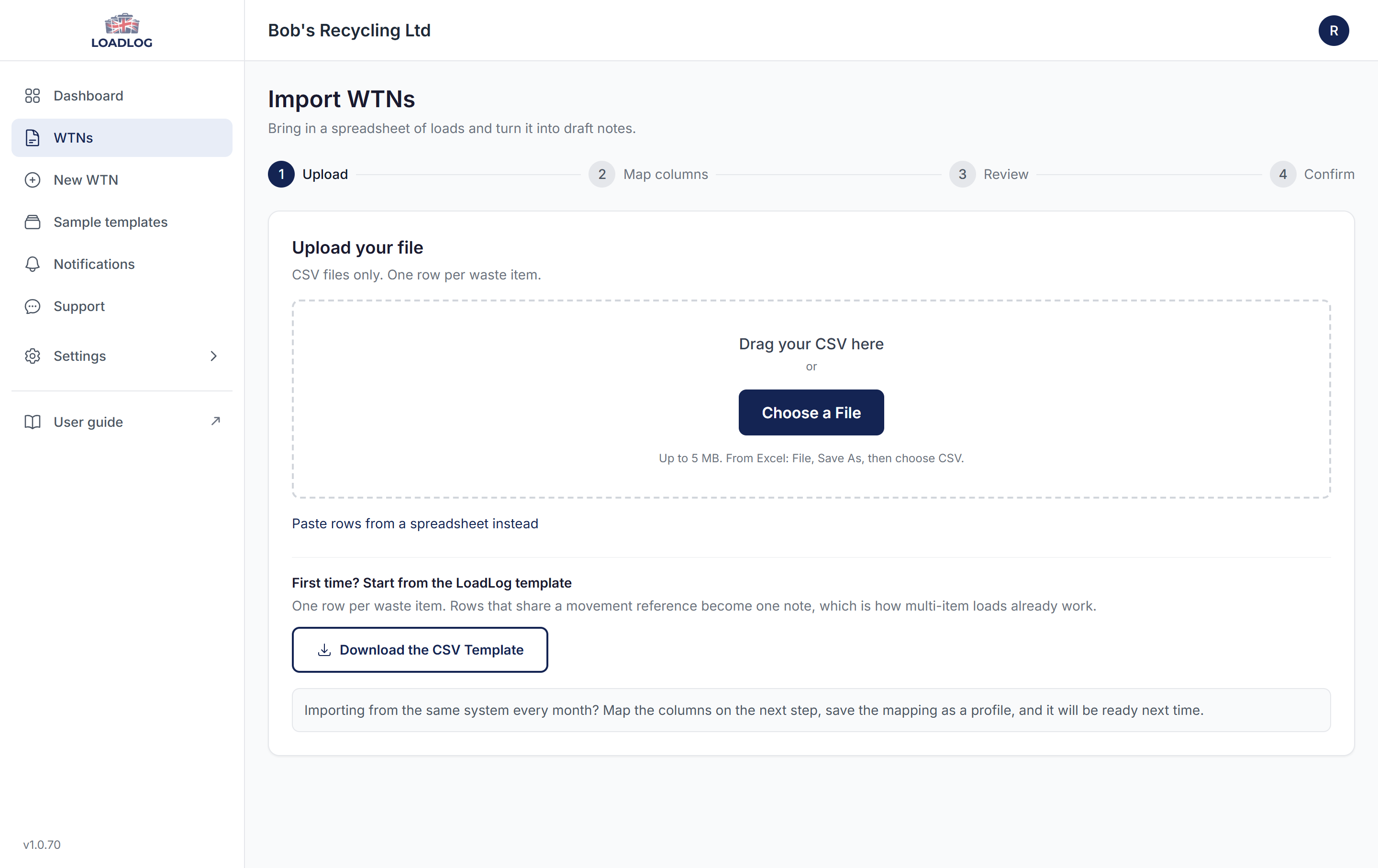
Many yards record loads on platform scales, axle scales or a spreadsheet. Export the list as a CSV, import it into LoadLog, and each row becomes a draft record with the carrier check and the code check applied. Rows with problems are listed with the reason and never block the rest of the file.
For days that live on paper, bulk entry does the same job: type or paste the loads into the grid, review the rows, set the arrival time once for the batch, and sign once for the lot.
Getting the code right
Soil and aggregate loads sit in a small number of codes: 17 01 01 for concrete, 17 01 02 for bricks, 17 01 07 for mixed concrete, bricks, tiles and ceramics, and 17 05 04 for soil and stones. The hazardous mirrors are easy to mix up, and a wrong code is still a wrong record: the penalties are the same as for a missing one.
LoadLog checks the carrier against the Environment Agency's public register as you record the load, keeps your usual codes one tap away, and puts the quantity, the vehicle and the arrival time on every record.
The deadline
Report digitally from 1 October 2026 in England and Wales. A fixed penalty of £1,000 applies per breach, and variable penalties with no upper limit are also available. Permit waste returns continue as normal alongside the service.
Record your first load in minutes. Start free.
Frequently asked questions
Which sites are in scope?
Any site licensed or permitted to receive controlled waste. For this sector that includes sites treating waste to produce soil, soil substitutes and aggregate, mobile treatment plant, soils and contaminated material treatment, and construction and demolition waste transfer stations.
We only screen and crush, we do not wash. Does this apply to us?
Yes. Screening, crushing, blending and the related sorting are exactly the activities the standard rules cover. Washing is not allowed under those rules; a site that adds washing needs a bespoke permit instead, and the reporting duty applies there too.
Which EWC codes will we use most?
Concrete is 17 01 01, bricks 17 01 02, mixed concrete, bricks, tiles and ceramics 17 01 07, and soil and stones 17 05 04. Track ballast is 17 05 08. The hazardous versions carry different numbers and an asterisk, and the sample library keeps the common non-hazardous grades one tap away.
Can we bring in figures from our scales or a spreadsheet?
Yes, on paid plans. Export a CSV from your scale software or spreadsheet, import it, and each row becomes a draft record. The column mapping is remembered, so repeat imports take minutes. Bulk entry does the same job for typed or pasted lists.
How long do we have to report each load?
Two working days, starting the day after the load arrives. Each record needs the arrival date and time, the quantity, the EWC code and the carrier details.
Do our permit waste returns change?
No. Waste returns under your permit continue as normal. Digital waste tracking is an additional duty, not a replacement, for now.
Bulk entry and CSV import come with Compliance Lite, which is free until the end of 2026 for sites that sign up before October 2026.