Digital waste tracking in Scotland: what SEPA requires from 1 January 2027
Listed on GOV.UK as a compatible software providerThe Scottish Environment Protection Agency, SEPA, enforces digital waste tracking in Scotland. From 1 January 2027, the Digital Waste Tracking (Scotland) Regulations 2026 require a permitted site that receives controlled waste to record every load it receives in the Digital Waste Tracking Service. The service is Defra's, the same one England and Wales started using in October 2026, so the mandate changes when you must report, not which system you use.
Scotland's later date is useful, but it is no longer a quarter away. A site that sets up now has the time between now and 1 January to make the routine ordinary: register the organisation, connect the API, record a few loads in the sandbox, then let January arrive with nothing new to learn. Defra's spreadsheet is the interim route, so a site that starts there will still have to move to a proper system before the duty begins.
Two months free for waste sites in Scotland: take up Compliance Lite before 18 December 2026 and your first two months are free, counted from the day the plan goes live on your account.
Start free →When the Scottish mandate starts
The regulations were made on 11 March 2026 and come into force on 1 January 2027. Until then, use of the service is voluntary. From that date, a permitted site that receives controlled waste must enter the specified information for each load by the end of the second working day after the load arrives.
SEPA calls this phase 1. It covers the sites that receive waste: transfer stations, scrap yards, landfills, energy from waste plants and composting sites. Phase 2, which will cover carriers, brokers and dealers, is still being developed and has no Scottish date yet. The later date follows a separate Scottish process, and England and Wales started in October 2026. The service is the same, so the weeks before January are time to test the flow, not time to wait for a different system.
Who has to report, and who does not
The duty falls on the operator of a permitted facility that receives controlled waste. Most commercial, industrial and household waste is controlled waste. If your site holds a permit or licence to receive waste, the starting assumption is that phase 1 includes you.
There are exclusions, and they are narrow. The regulations do not apply to a place provided by a waste disposal authority under section 53(1)(a) of the Environmental Protection Act 1990, which covers council household waste recycling centres. SEPA also lists former waste licensing exempt sites, simple or complex, and new authorisations issued at registration level under the Environmental Authorisations (Scotland) Regulations 2018 as outside phase 1.
The test is the authorisation, not the size of the site. A small transfer station with a permit is in scope, while a council-run recycling centre is not. If you are not sure which authorisation covers your site, check the permit number and ask SEPA. The permit number identifies the authorisation and the site it covers, so it is the quickest thing to check.
If your authorisation is one of those, you are outside the mandate for now. If it is borderline, ask SEPA before you build a process around it. Our who needs DWTS guide covers the common site types.
What a load record contains
The regulations set out the specified information. In practice, a record carries the waste code and description, the quantity and unit, whether the waste is hazardous, any persistent organic pollutants, the carrier's name and registration number, the receiving site, and the date and time the load arrived. The service returns a unique reference number for each record, and that number is your proof of receipt.
One record per load, not one per day. The deadline is the end of the second working day after the day of receipt, with working days counted as days that are not weekends or bank holidays. A load received at 9am on Monday must be in the service by 11:59pm on Wednesday. If the service is down, the regulations set out an outage process: notify SEPA, keep a written record by the same deadline, and enter it into the service within seven days of the outage ending.
Hazardous waste and POPs
Hazardous waste adds fields to the record: the hazardous waste data, the consignment note number, and persistent organic pollutant data where the waste contains POPs. If your site takes hazardous waste, check that the waste code and the consignment note agree before the load is booked in. A mismatch between the two is easier to fix at the gate than after the record has gone in.
Special waste consignment notes in Scotland
Scotland calls hazardous waste special waste, and it does not use the England and Wales consignment note. A movement of special waste travels on a special waste consignment note carrying a unique code issued by SEPA, whatever its destination in the UK. All special waste produced in Scotland must be consigned using a SEPA-issued consignment note or code, and completed notes go back to SEPA electronically. The five parts of a consignment note sets out what each part must carry. Pre-notification applies in Scotland where the guidance requires it.
You need one when the load is hazardous waste. A standard waste transfer note covers non-hazardous waste, so a hazardous movement takes the consignment note instead, and both are separate from the return you make to the service. From 1 January 2027 the record for a hazardous load also carries the hazardous waste data, the consignment note number and persistent organic pollutant data where the waste contains POPs, so the note and the return have to agree.
The records are kept for different periods. A waste transfer note is kept for two years in England, Wales and Scotland. Hazardous waste consignment notes are kept for three years by producers, holders, brokers and dealers, one year by carriers, three years in Northern Ireland, and five years or more at permitted waste sites.
| Document | What it covers |
|---|---|
| Waste transfer note | Non-hazardous waste. Records the transfer between the parties and is kept for two years in England, Wales and Scotland. |
| Hazardous waste consignment note | Hazardous waste in England and Wales. Completed in five parts and kept for three years by producers and holders, one year by carriers. |
| Special waste consignment note | Hazardous waste in Scotland, which Scotland calls special waste. Carries a unique code issued by SEPA, whatever its destination in the UK. |
What happens when a load arrives
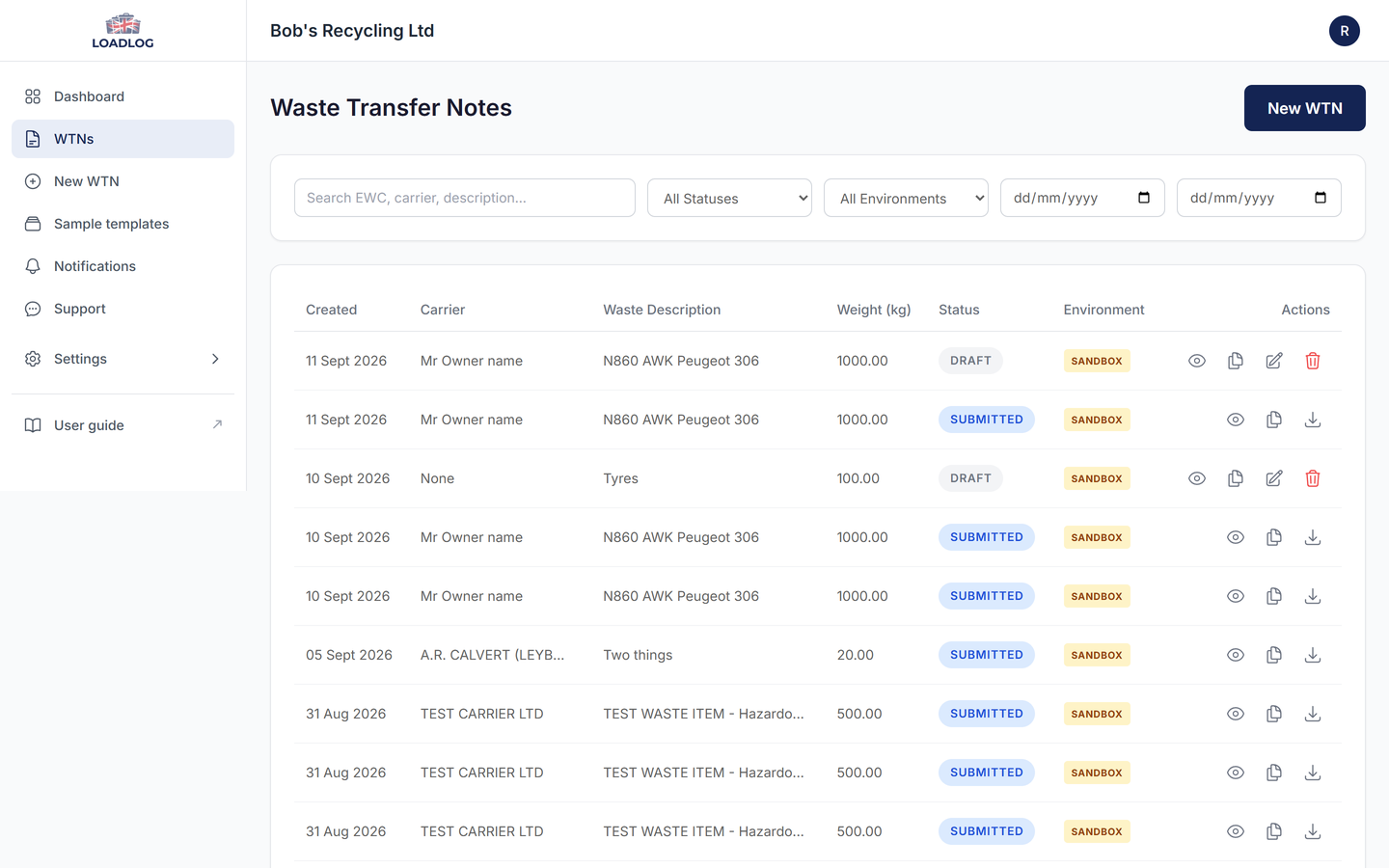
The gate records the carrier, the waste code and the weight, and the driver signs. The record goes to the service, which returns a reference number. The reference is stored against the load, and the PDF is available to download. If the waste code or weight is wrong, correct the record in the service, because the correction is part of the audit trail. Keep the reference number with the load record. A rejection is not a filing, so correct it and resubmit. The PDF and the reference belong with the rest of the site's waste records.
What the mandate does not change
The mandate adds a record of receipt. It does not replace the waste transfer note, the duty of care, the hazardous waste consignment note or carrier registration. A transfer note still travels with the waste and records the transfer between the parties. A hazardous load still needs its consignment note. A carrier still needs the registration that lets it transport waste. DWTS sits alongside those duties, which is why the gate routine is the place to join them up rather than a separate job at month end.
More than one site or organisation
A Defra account can hold more than one organisation, but each organisation registers separately and pays its own £26 charge. A group with three operating companies has three registrations and three annual charges. Sites that share one organisation share the registration, which is the usual arrangement for one company with several yards. SEPA enforces the duty, but Defra runs the service, so registration, the API and the reference numbers come from Defra.
Penalties for a missed or wrong return
Regulation 17 sets the penalties. An offence is punishable on summary conviction by a fine not exceeding the statutory maximum, and on conviction on indictment by an unlimited fine. The offences cover failing to record a load, failing to correct a record, and making a statement you know to be false or misleading, or making one recklessly. SEPA can also serve a compliance notice and recover its enforcement costs.
The practical risk is the gap, not the headline fine. A missing record is visible in the service, and a site that cannot show a record for a load has no answer when SEPA asks.
The Scottish carrier register
A carrier's registration number is a required field, and the register it belongs to matters. LoadLog checks all four UK public registers, including SEPA's, at the point the record is created. A number that does not match is flagged while the driver is still at the gate, not discovered weeks later when a return is rejected.
The same check covers carriers registered in England, Wales and Northern Ireland, which matters for sites near the border.
How LoadLog handles the return
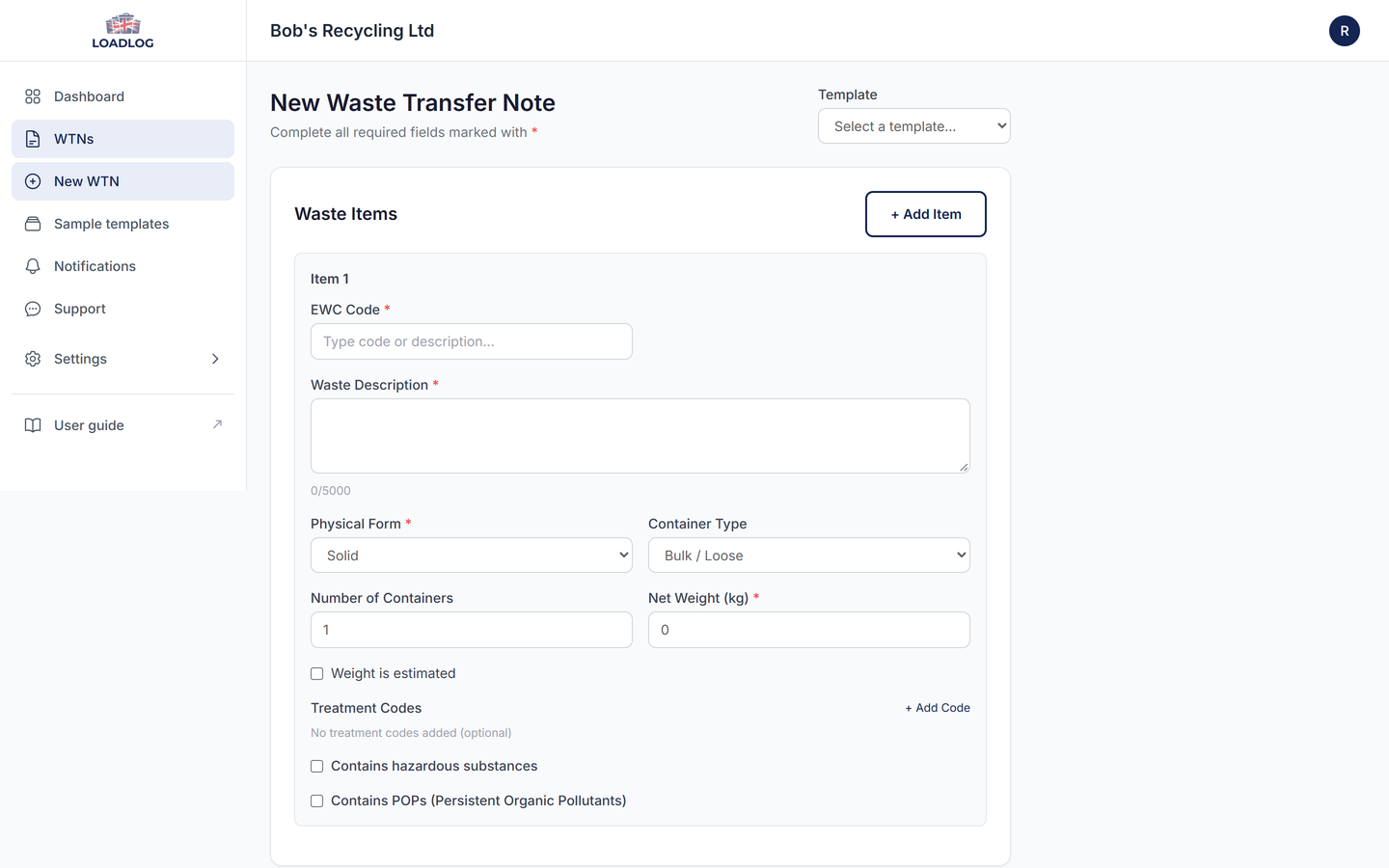
LoadLog creates the record at the gate, checks the carrier number against the public registers, submits the record to Defra and stores the reference number against the load. The notes list shows which records have a reference and which are still waiting, so a missing submission is visible before SEPA notices it. The PDF is generated from the same record, so the paperwork and the return cannot drift apart.
What to do before 1 January 2027
Register the organisation for the service and get the API code. The annual charge is £26 per organisation, and the first payment is due by 31 January 2027. Then connect the code in LoadLog and prove the whole flow in the sandbox. Set up templates for the loads you see every day, and use import for anything your weighbridge already records. Our register guide and first submission walkthrough cover the steps.
A site taking a handful of loads a week can build the habit on the free plan. Compliance Lite removes the monthly note limit when volume makes that worthwhile. The first live return is the one to rehearse, not the first one to attempt.
Sites that also operate in Northern Ireland should read the Northern Ireland page, which covers the draft rule, the penalties and the EU border position.
Frequently asked questions
When does digital waste tracking become mandatory in Scotland?
1 January 2027. The Digital Waste Tracking (Scotland) Regulations 2026 come into force that day, and permitted sites that receive controlled waste must use the service from then.
Which Scottish sites are outside the mandate?
Places provided by a waste disposal authority under section 53(1)(a) of the Environmental Protection Act 1990, which covers council household waste recycling centres. SEPA also lists former waste licensing exempt sites and new authorisations at registration level as outside phase 1.
What is the deadline for each load?
The end of the second working day after the day the load arrives. A load received at 9am on Monday must be in the service by 11:59pm on Wednesday.
What are the penalties for missing the deadline?
On summary conviction, a fine not exceeding the statutory maximum. On conviction on indictment, an unlimited fine. SEPA can also serve a compliance notice and recover its enforcement costs.
Does the mandate apply to waste carriers in Scotland?
Not in phase 1. Phase 1 covers sites that receive waste. Carriers, brokers and dealers are phase 2, which is still being developed and has no Scottish date yet.
Is a special waste consignment note the same as a waste transfer note?
No. A waste transfer note records a transfer of non-hazardous waste, while a special waste consignment note covers hazardous waste, which Scotland calls special waste, and carries a unique code issued by SEPA.
Do waste transfer notes go away?
No. The regulations do not remove the existing duty of care or waste reporting rules. A transfer note and a DWTS record are separate documents and a site can need both for the same load.
Can I submit by spreadsheet instead of the API?
Yes. Defra accepts API submissions or a completed spreadsheet. LoadLog submits by API, which removes the rekeying and gives you the reference number on the record.
How much does it cost?
Defra charges £26 a year for each organisation, and the first payment is due by 31 January 2027. LoadLog's free plan covers five notes a month. Compliance Lite is £12 a month for unlimited notes.
Does LoadLog work for sites in Scotland?
Yes. It records the load, checks the carrier against SEPA's register and the other UK registers, submits to Defra and stores the reference number and the PDF.
Can we start in Scotland before 1 January 2027?
Yes. Scottish sites can register with Defra and record loads now, and LoadLog checks the carrier against SEPA's register and the other UK registers. Starting now means the routine is in place before the duty begins.
Compliance Lite is £12 a month, and your first two months are free if you take it up before 18 December 2026, counted from the day the plan goes live on your account.